How Industry-Academia Collaboration Is Redefining Semiconductor Talent Development in the Age of AI
Preface From global policy trends to practical models — how industry-academia partnerships are becoming the core engine of semiconductor workforce development A single AI chip, from design to mass production, draws on deep expertise across chip architecture, process engineering, packaging and testing, system verification, and hardware-software co-design. These capabilities cannot be built through any one academic discipline, nor acquired simply by studying theory in a classroom — they require time, hands-on practice, and sustained dialogue between industry and academia. This is precisely why semiconductor talent development has become one of the defining topics in technology policy around the world. |
The Structure of Semiconductor Workforce Demand Is Shifting
Not long ago, the semiconductor industry required a relatively well-defined set of roles: process engineers, equipment technicians, circuit design engineers — each with a clear lane. But as demand for AI chips has surged over the past several years, what the industry needs from its semiconductor workforce has quietly transformed.
Today’s engineers must not only understand fabrication processes, but also grasp how AI models place demands on computing architectures. They must not only master circuit design, but think at the system level about tradeoffs between power consumption, latency, and throughput. This demand for “composite” talent breaks down the traditional boundaries between disciplines — and puts the existing semiconductor talent pipeline under fundamental strain.
The problem isn’t that people aren’t capable enough. It’s that the frameworks used to develop them were never built for these requirements.
How Countries Are Responding: Industry-Academia Collaboration as a Shared Solution
Faced with this structural challenge, leading semiconductor ecosystems around the world have been converging on a shared direction — industry-academia collaboration — rather than waiting passively for graduates to emerge from existing pipelines.
The United States, through the CHIPS and Science Act, has channeled resources toward encouraging technology companies and universities to co-build research centers, allowing students to engage with real industry problems while still in school. Companies such as Intel and NVIDIA have established university partnership programs where they participate not as employers, but as co-designers of curriculum and research agendas — a model that keeps semiconductor workforce development closely tied to actual production realities.
Japan, in its semiconductor cluster development around Kumamoto, built talent supply chains into the planning from the very beginning. Local academic institutions such as Kyushu University have formed close networks with manufacturers, bringing research and production within walking distance of each other.
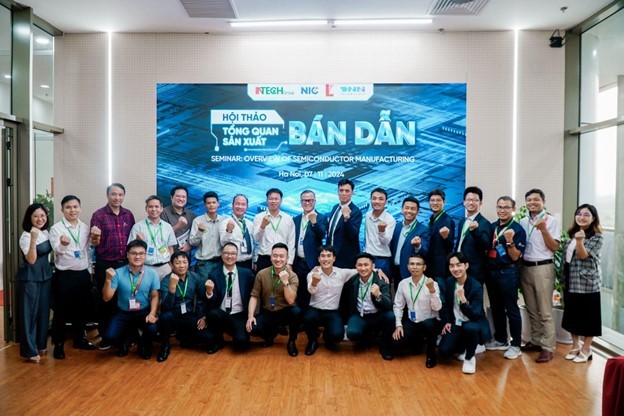
Taiwan has actively promoted the establishment of semiconductor institutes in recent years, with curriculum co-designed by industry, academia, and research institutions working together to provide internship placements and align semiconductor training more closely with actual production needs. These efforts are still evolving, but the direction is becoming clear: academic institutions provide depth of knowledge; industry provides the arena for practice. The more porous the boundary between the two, the more well-rounded the talent that emerges.
The Real Value of Industry-Academia Partnerships: Closing the Gap Between Learning and Doing
The traditional academic path has irreplaceable value — foundational research, theoretical frameworks, long-horizon thinking. These are the nutrients that only an academic environment can cultivate. But certain capabilities that industry needs — making engineering decisions under tight constraints, driving complex projects across organizational boundaries — are difficult to fully simulate in a classroom setting.
The point of industry-academia partnerships in semiconductor development is not to replace theory with practice. It is to build an environment where the two can nourish each other. When research questions arise from real engineering challenges, and when internships involve genuine participation in development cycles rather than peripheral tasks, students gain not just skills but judgment — precisely the quality that is most scarce and hardest to substitute in the age of AI.
For policymakers, enabling this kind of collaboration requires more than funding. It requires institutional flexibility: pathways for industry professionals to teach at universities, channels for academic research to translate into practical application, and conditions that make talent mobility between industry and academia the norm rather than the exception.
Taiwan's Position: From Manufacturing Advantage to Talent Ecosystem Advantage
Taiwan’s standing in semiconductor manufacturing is well established. But sustaining that position into the AI era will require more than process excellence. The real moat lies in whether Taiwan can build an ecosystem that continuously produces high-quality composite talent through structured semiconductor workforce development.
That means academic institutions need richer feedback loops from industry. Policy needs to create incentives for cross-domain collaboration. And companies need to treat semiconductor talent development as a long-term investment rather than a short-term staffing solution.
Thinking Through What Comes Next
Talent development has never been something any single party can accomplish alone. It requires sustained dialogue between academia, industry, and policy — operating within a shared framework.
DNN Technology closely follows talent and technology trends across the semiconductor and AI sectors. If you have observations, questions, or would like to exchange ideas in this space, we welcome the conversation.
about dnn tECHNOLOGY
Headquartered in Taiwan, DNN Technology is a global leader in semiconductor equipment and comprehensive solutions, specializing in used semiconductor equipment trading, laboratory and cleanroom systems construction, and technical consultancy services. With over two decades of industry experience and a team comprising more than thirty experienced technical experts, DNN Technology has successfully executed projects across over fifty countries, committed to providing customized, innovative, and efficient solutions.